
A Note on Our Martagon Lily Collection — 2026
Each year, Parkland Peonies typically offers a wide selection of martagon lilies. This season, that selection will be noticeably smaller, and there is a very good reason for it.
Our martagon collection had been growing in the same location since 2016. Over time, the plants thrived — perhaps too well. As clumps expanded, the planting became increasingly crowded, and despite careful management, it became clear that individual bulbs were beginning to decline as they competed for space and nutrients. Left unaddressed, the collection would have continued to weaken year by year.
Moving the entire martagon collection was a monumental decision, but ultimately a necessary one. The alternative was to slowly lose plants that had taken years to establish.
Planning began well in advance. A new site was selected — more than three times the size of the original planting — and the soil was worked repeatedly throughout the summer. Anyone who farms knows that freshly worked ground invites weeds with impressive enthusiasm, a phenomenon I’ll never fully understand, but one that demands patience and preparation.
In early fall, the digging began. What had once been single bulbs had, in many cases, become clumps of fifteen to twenty. The work was methodical and demanding: digging, sorting, labeling, packing, and storing. After ten solid days, the task was complete — 42 large bulb crates filled with martagon lilies. I can only estimate how many thousands of bulbs were lifted, but at that moment it struck me that this may well be the largest martagon collection in Canada.
Planting, however, had to wait. Peony digging season was underway, and customer orders came first. The martagons were stored carefully in slightly moist peat moss, which allowed basal plates and feeder roots to continue developing — giving the bulbs a strong head start before winter.
By mid-October, with peony orders complete, planting could finally begin. The original martagon garden occupied two 500-foot rows; the new site consists of eight 400-foot rows — just over three times the original space. With careful labeling and documentation essential, I handled the work myself. When accuracy matters, responsibility is best kept close.
I was fortunate to have help for one long Saturday from friends Dan and Faye — help that I greatly appreciate. By Sunday, both reported they could no longer walk, which probably says more about the work than I ever could. After six full days of planting, the new martagon bed was complete. Four remaining crates of mixed bulbs were shared with gardening friends.
One final note worth mentioning: the condition of the bulbs at planting was excellent. Stored correctly, with roots already forming, they went into the ground well prepared for winter. I’m very much looking forward to seeing how they perform in their first spring in this new space.
This transition explains why our martagon offering is limited this season. The collection needs time to settle, re-establish, and grow into its new home. In the long run, this move ensures stronger plants, healthier bulbs, and a better future for the collection.
Thank you for your understanding — and for valuing the long view, just as we do.
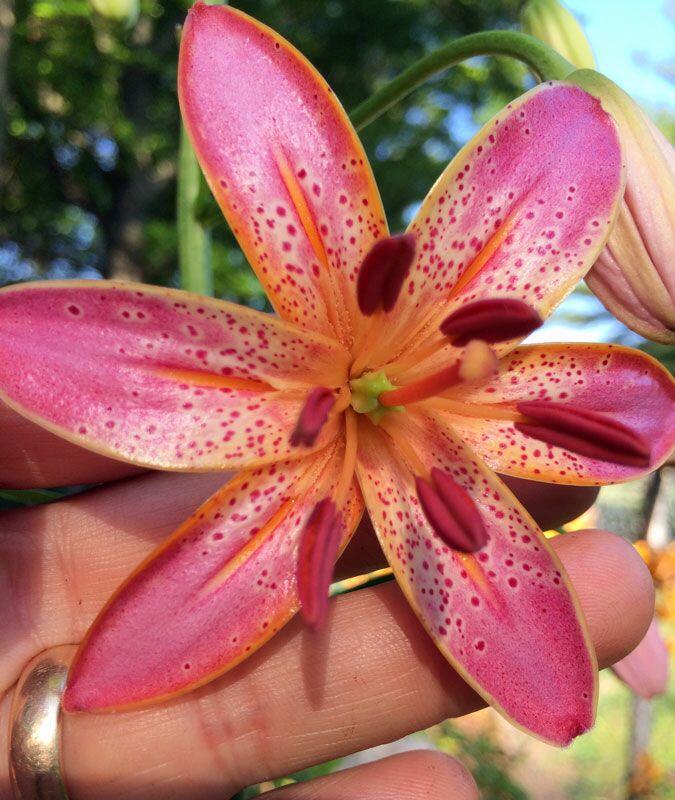
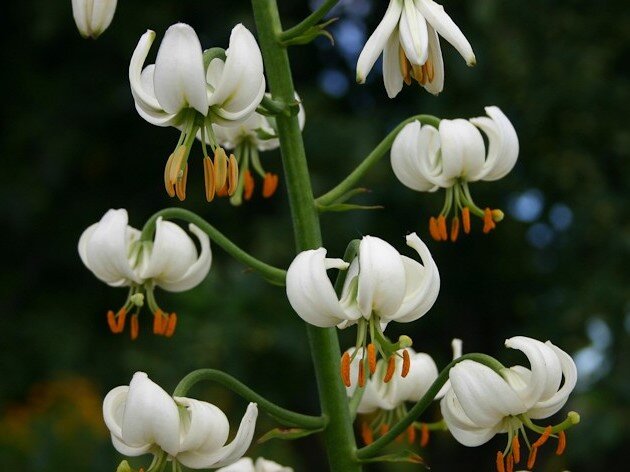
The genus Lilium boasts more than 100 species. In the martagon lily group there are many hybrids but only 5 species, which are: Lilium martagon, L. hansonii, L. tsingtauense, L. disticum, and L. medeoides.
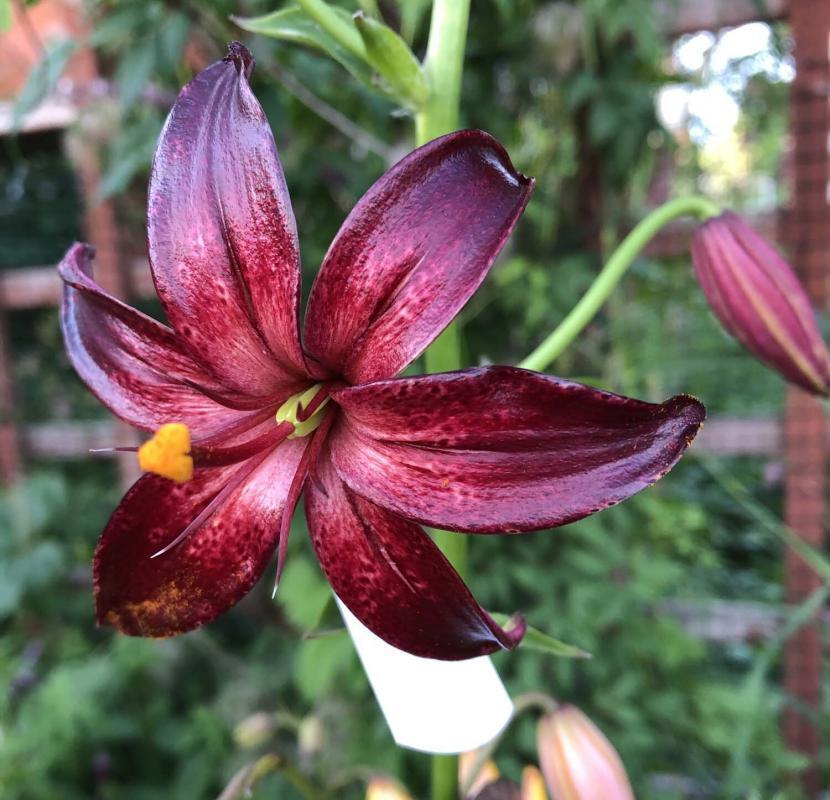
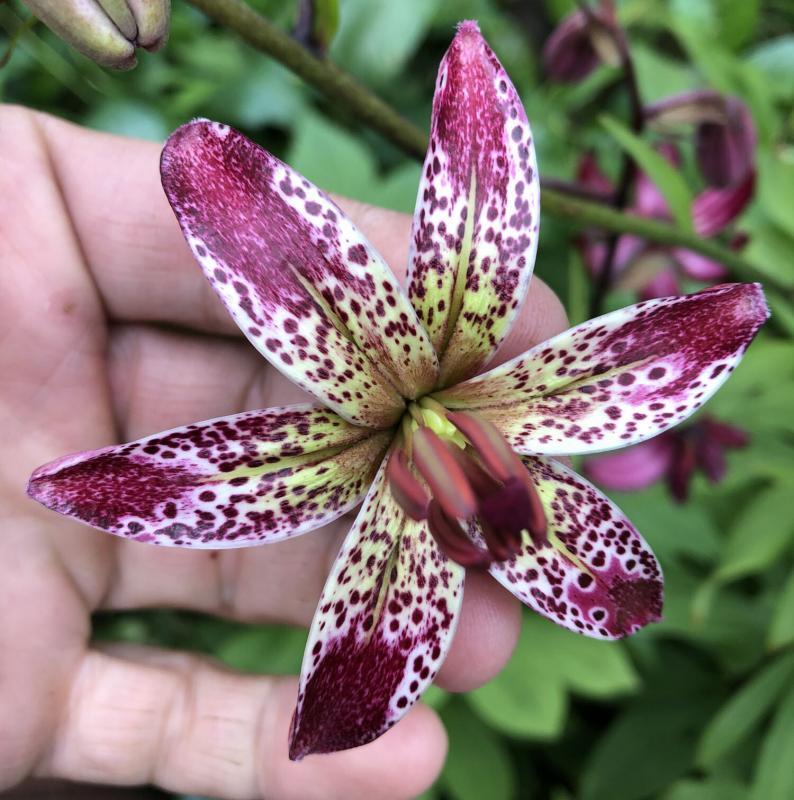
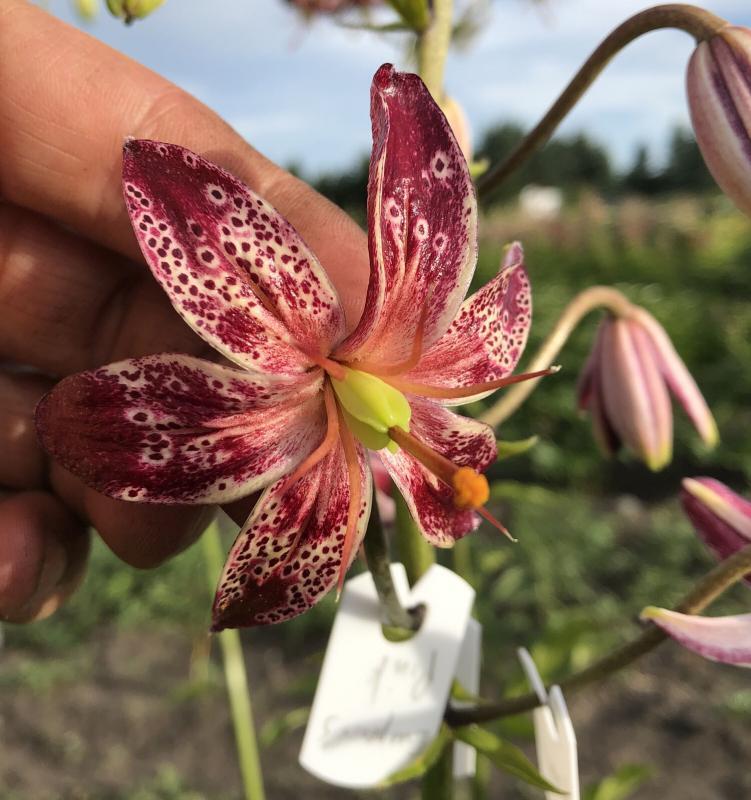
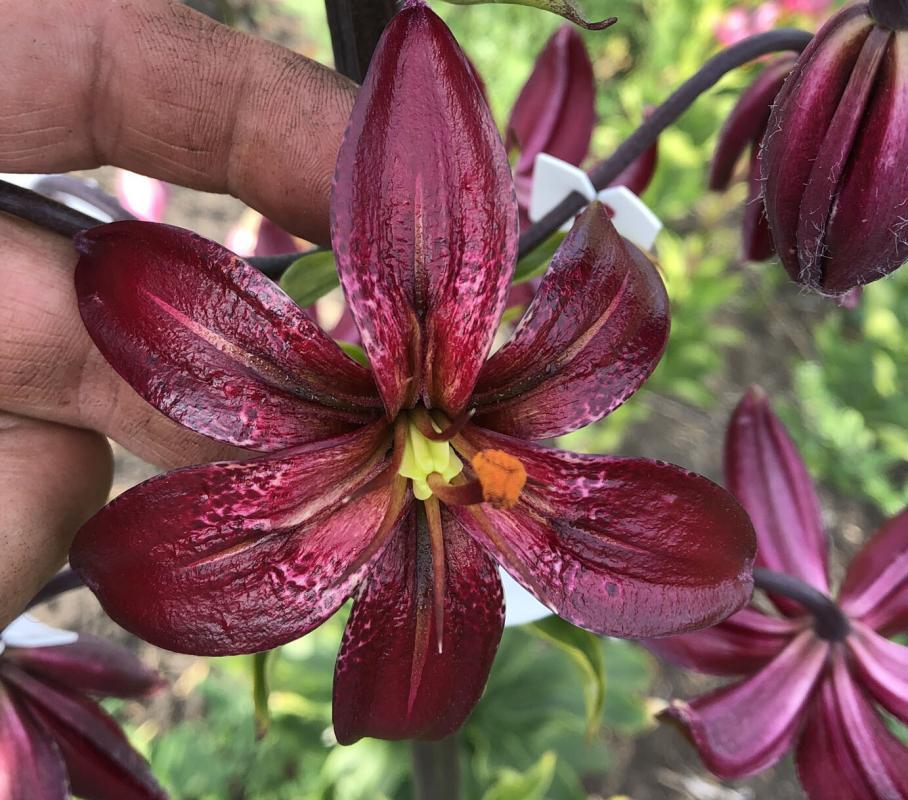
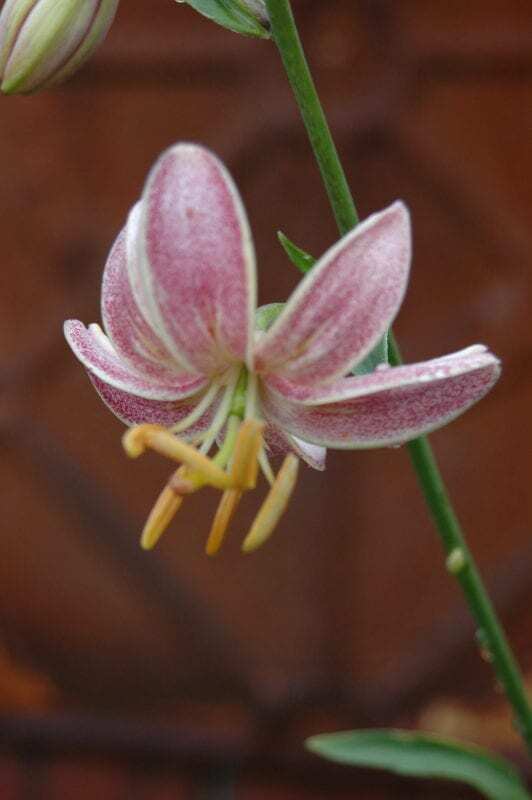
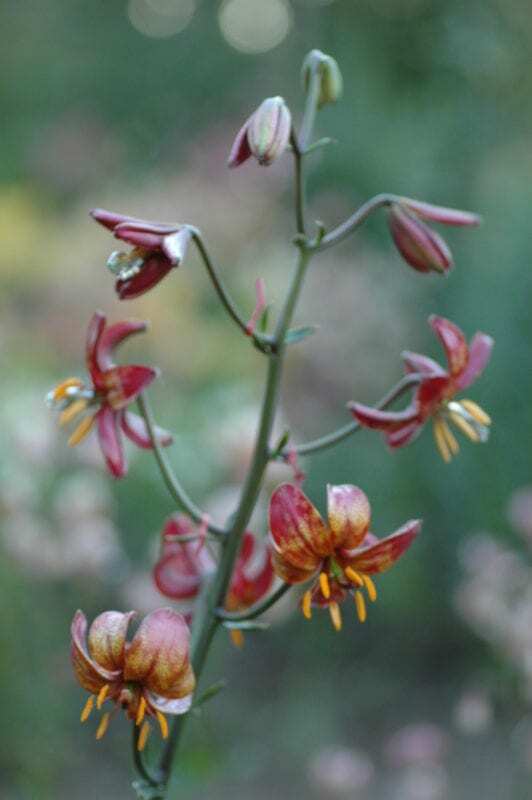
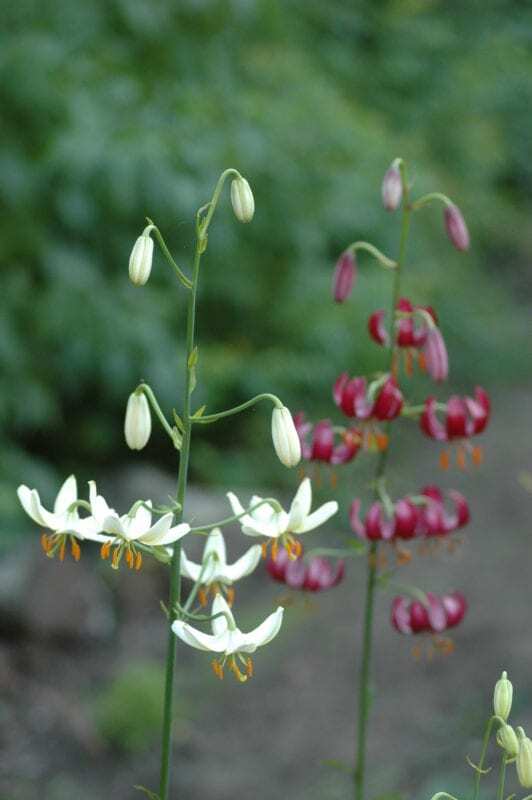
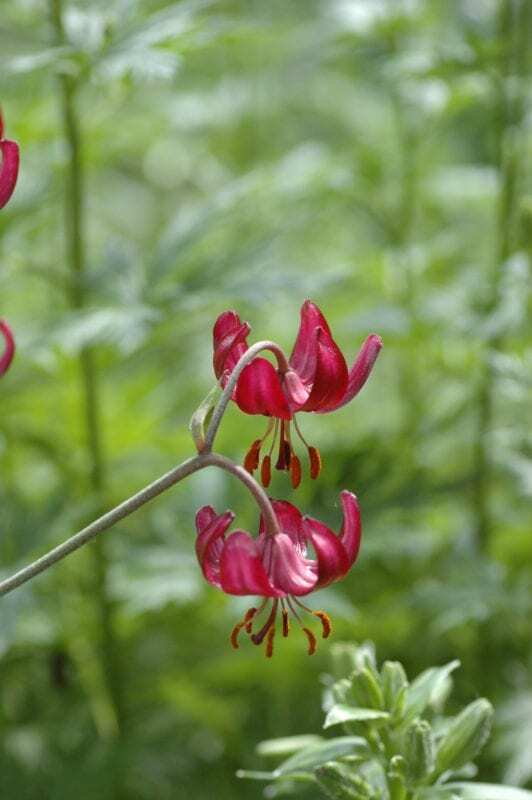
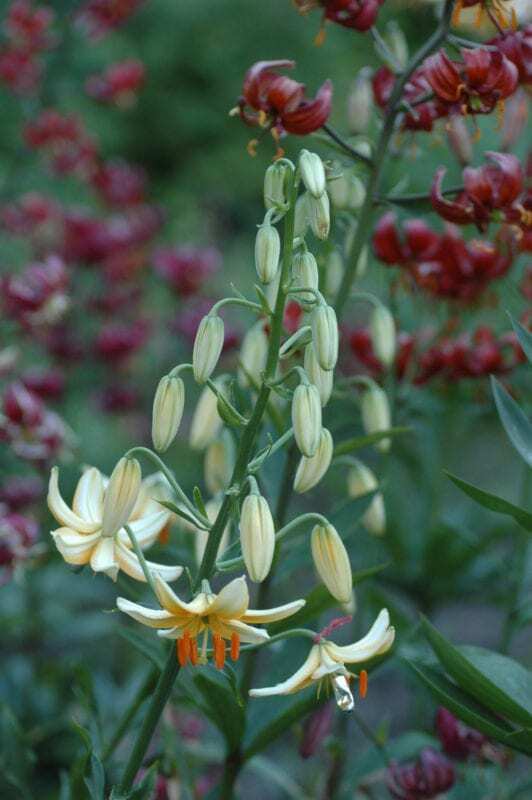
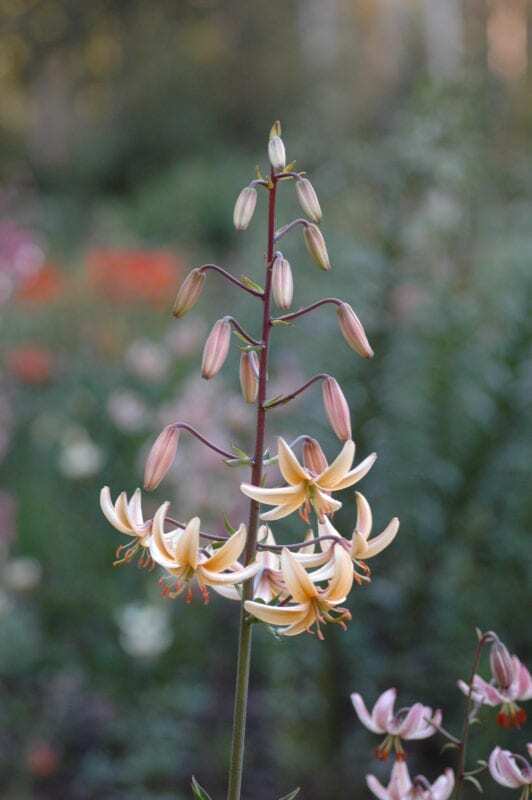
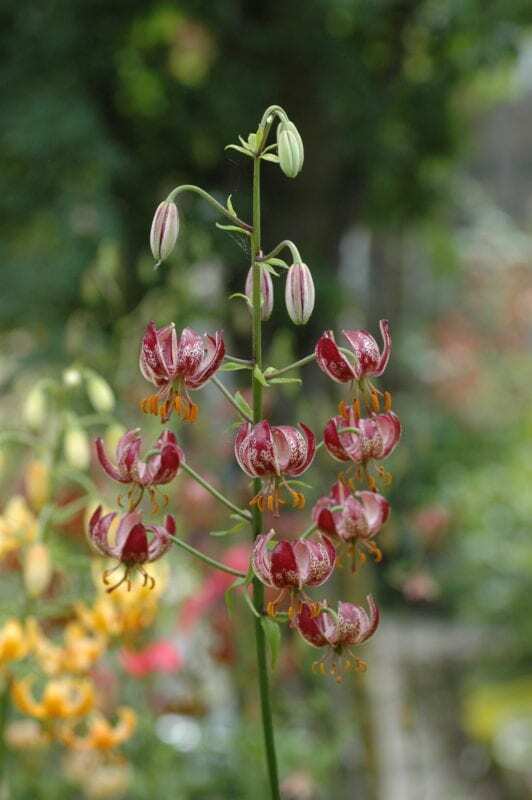
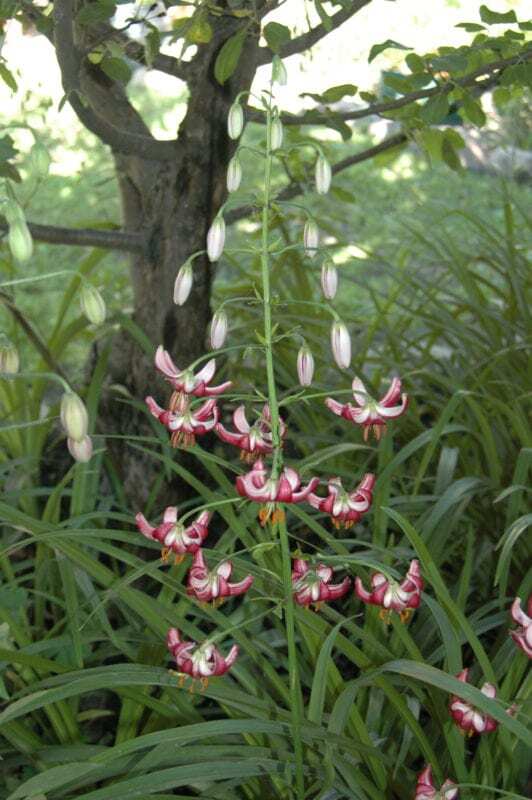
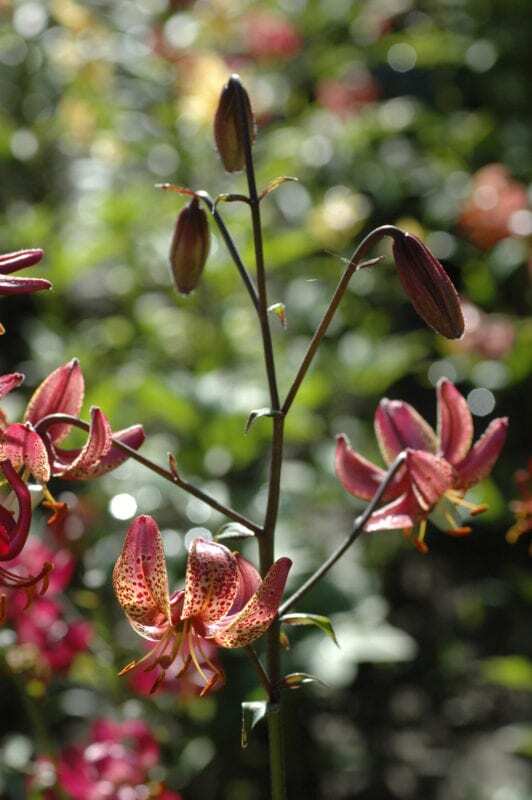
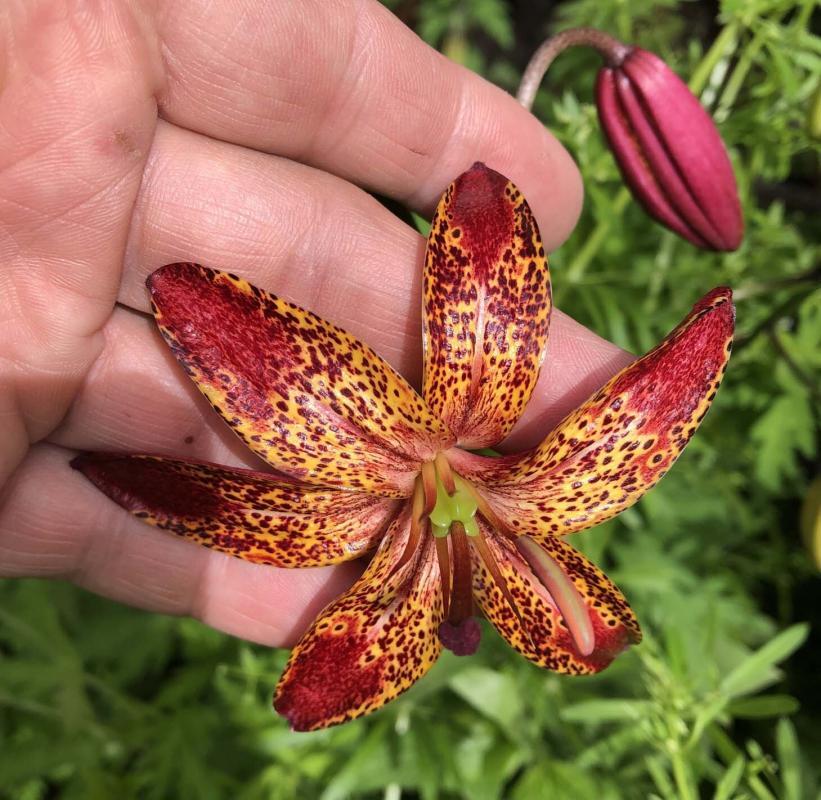
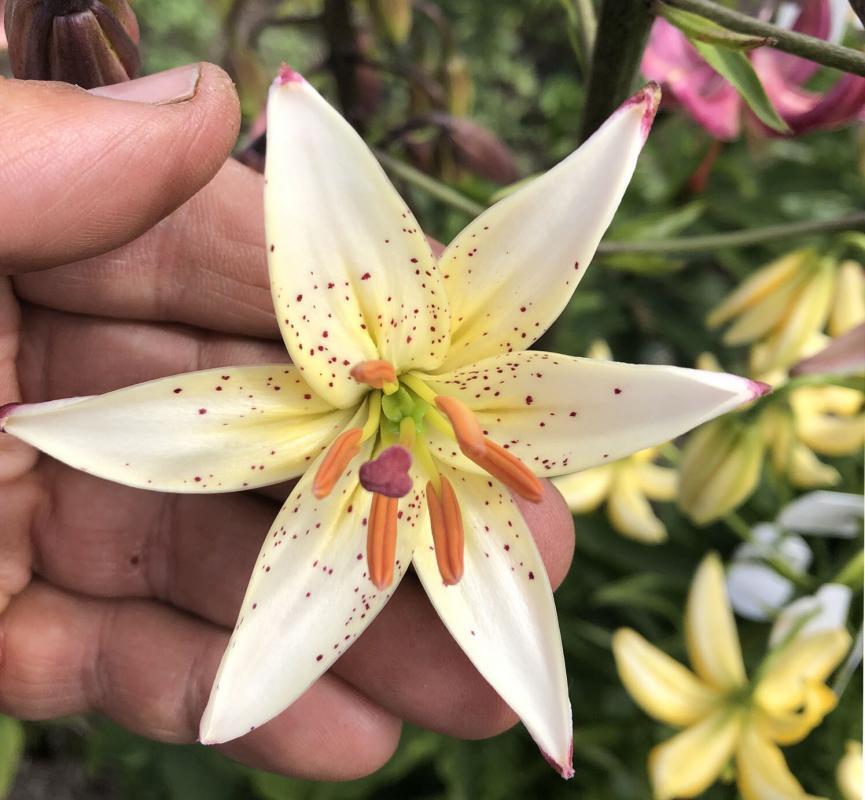
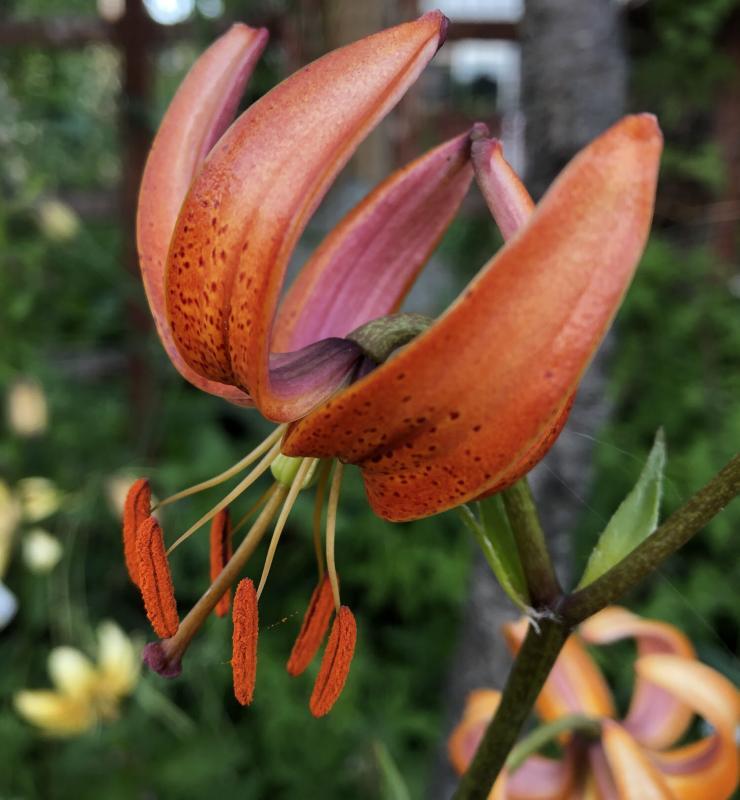
Martagon species are distinctive in character and place of origin. These beautiful lilies have many characteristics that distinguish them from others in the Lilium genus. They can be identified by a distinctive leafy pattern, referred to as whorls. Each plant has 3 sets of whorled leaves moving up the stem like a collar about every 6 inches, rather than leaves that are scattered around the stem like other lilies. Once established, some lilies can grow up to 6 feet tall and have a flower count of up to 50 flowers. The flowers are distinctive as well. They are smaller than the average garden lily, with thick petals which usually reflex back and upwards. Many have a waxy sheen to them. Martagons and their hybrids come in every color possible except blue, and the number of buds varies from 1 to 50. The flowers are mostly down-facing, and the stem usually forms a triangular pedicel, which allows the flowers to hang down, showing off their beauty. Many hybridizers are making great strides in producing up-facing and side-facing martagon lilies here in Alberta and around the world.
Martagon lilies have been in cultivation for many years, but we rarely see them in the average garden. This may be due to a couple of things such as cost and familiarity. A single bulb can reach prices as high as $50 per bulb. The price for martagons has always been higher than the average Asiatic hybrid garden lily. One could say it is because they have not been popular in the lily trade, as they have down-facing flowers, and because the martagon lily takes 5 to 7 years to bloom from seed. This is changing as martagons are being propagated in mass numbers, bringing the prices down, allowing the average gardener to purchase this beautiful lily for his/her garden.
The best way to protect your martagon investment is to understand what this lily requires to reach its growing potential. Martagons like to be planted in a rich organic loam soil, but will also tolerate heavier clay soil, as long as other conditions are favorable, such as good drainage and proper sunlight. This lily does well in a dappled shade environment, requiring around 6 hours of sun per day. These elegant plants are a great way to add a splash of color in a shaded garden where the flowers last longer than those growing in the sun. This does not mean that martagon lilies can not be planted in direct sunlight. Like other lilies, martagons thrive with regular moisture but, if planted in direct sunlight, they may need to be mulched and/or watered more frequently to prevent the soil from drying out. However, when planting any lily, make sure it is not planted in areas where water can pool. Lily bulbs will not tolerate standing water, and will rot fairly quickly if no drainage is provided. The martagon group of lilies is very hardy and will survive temperatures up to -40 C (zone 2). They also have good disease resistance and will thrive in the garden for many years. Unlike other lilies, the martagon bulb does not need to be divided for many years, doing better if left undisturbed, providing you a large floral display which gets bigger and better each year. I’m sure your neighbors will let you know when your martagons need to be divided!
For best results, martagon bulbs should be planted in the fall when the bulbs are dormant. Plant the bulb, so that 2 inches of soil covers the top of the bulb. Martagons have contractual roots, so they will pull themselves down or up as required, and then settle in. Water the bulb in, and forget about it until next season.
In the first season the martagon plant has a tendency to sulk or die back after a flush of green growth. This is due to the fact that when planting a new bulb many of the roots have been cut off for transport. It takes a full year or more to develop these roots, which are required to support all part of the growing plant and flower. In the second year the bulb will be fully established and will exhibit normal growth patterns.
Once a martagon is established it will continue to flower year after year. Many have been know to remain in the same location for over 50 years. Martagons multiply from bulbs, and usually divide into two bulbs every two years or so, some longer, it really depends on the variety and plant vigor. Being slow to multiple is one reason why this amazing shade loving lily is pricy.
Martagons do best in a dappled shade environment, they also do well in full sun, and deep shade. This is why so many gardeners love to plant martagons in their gardens, as this plant is very adaptable. The key to growing fantastic martagons is to keep the soil moist in spring, until mid summer, or until the plant has finished blooming. After bloom the plant slowly moves toward dormancy, using less energy, and so less moisture is required. It is best to remove spent flowers or seed pods to limit the plants energy or seed production.
This wet / dry pattern happens in nature, as martagons grow along forest edges, or in a dappled forest environment. They receive enough light in spring, and moisture levels are higher due to spring rains and or snow melt. As the canopy of trees and shrubs go into full leaf, the martagon has stored enough energy to bloom, and creates it’s flowering tips for the following season growth underground. In mid summer, the surrounding vegetation competed for moisture, but the martagon has all ready finished flowering, and slowly moves into dormancy. This is why martagons can withstand drier conditions later in the growing season.
Plant a martagon, and find out the beauty of this flower for yourself.
Martagons are easy to plant from seed. They can be planted directly in the garden in the fall or planted indoors. Whatever method you decide on a cold period is required for the seed to send up it’s first true leaf.
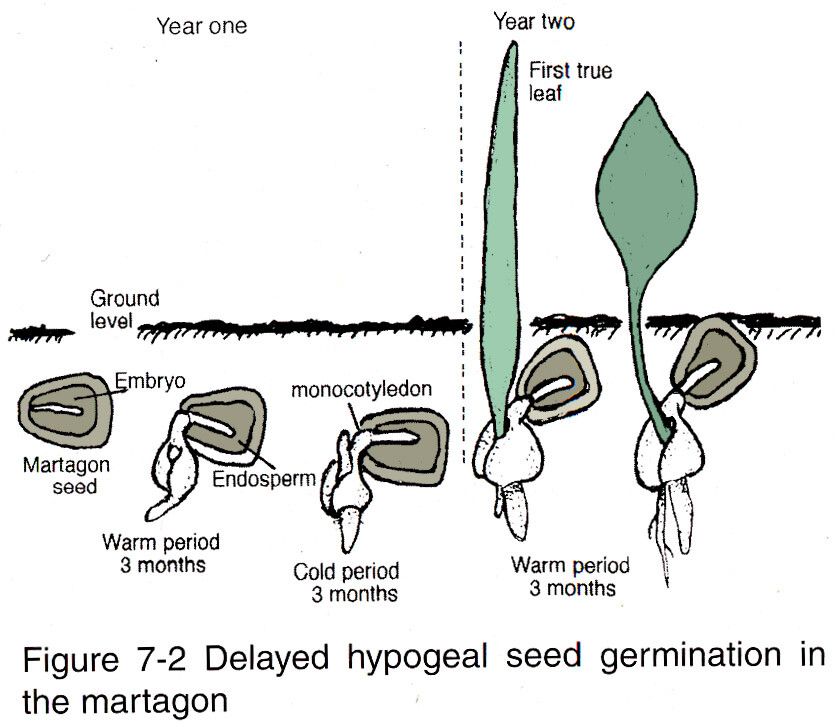
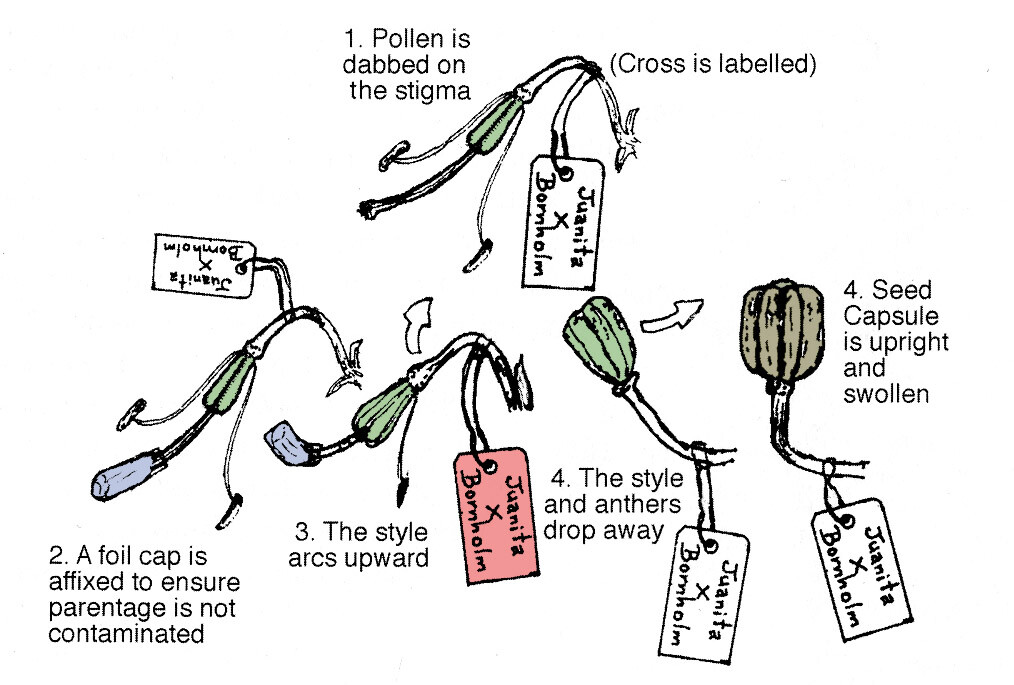
Th easiest way to get new martagon seedlings is by hybridizing martagons in your own garden. The illustration below gives you the basic understanding of what is required to get new seed, which can be planted, for new martagon seedlings.
- Pollen is dabbled on the stigma
- A foil cap is affixed to ensure parentage is not contaminated
- The style arcs upward when flower is fertilized
- the style and anther drop away, and bud starts to enlarge
- Seed capsule is upright and swollen. Indicating good amount of seed is in the capsule.
- Plant the seed in the fall outdoors, or germinate seed indoors using the baggie method.